
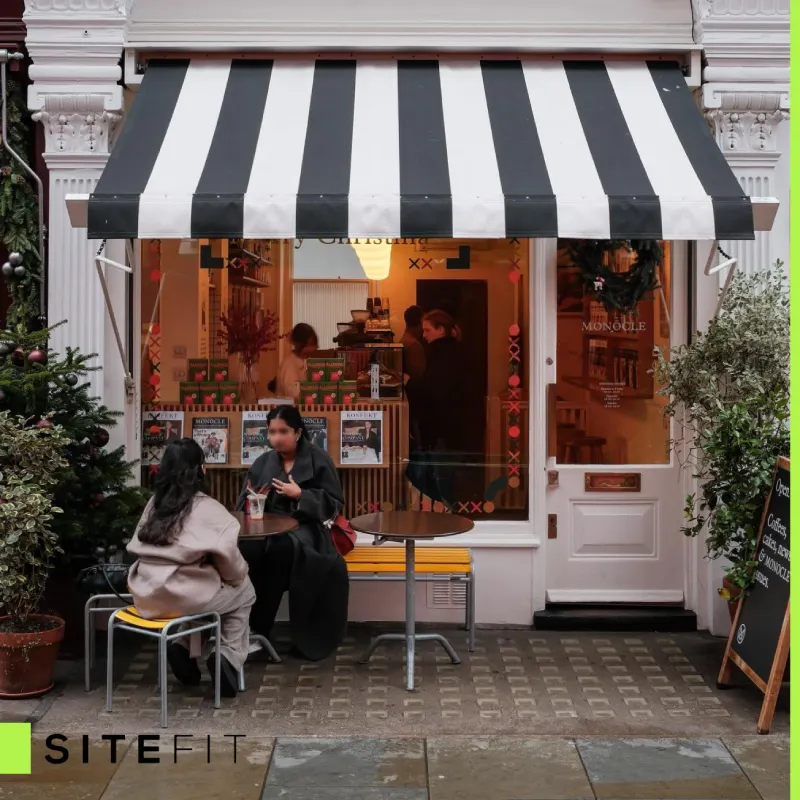
You have found a unit that looks promising. It is near a station, the frontage is smart and the rent seems within reach. It is tempting to picture the queue already. Before you commit, though, ask a more useful question: does this particular spot fit the coffee shop you want to run? A good London location is not simply the busiest street or the trendiest postcode. It is a place where the people you hope to serve can reach you, where your offer makes sense, and where the practical details do not quietly undermine the idea. This guide gives you a calm way to look at those factors. It cannot predict sales or replace advice on a lease, but it can help you decide what to investigate next.
Start with the coffee shop you want to open
“Coffee shop” covers very different businesses. A quick takeaway counter for commuters needs a different setting from a neighbourhood café where people sit with laptops, or a bakery café built around weekend visits. Write a short description of your offer before judging an address. Include the main reason someone would choose you, the times you expect to trade, whether customers will sit in, and how much of the day depends on passing trade. Keep it simple; the point is to make your assumptions visible.
Then picture a normal Tuesday, not just opening day. Who is likely to be nearby at breakfast, lunchtime and mid-afternoon? How would they notice the shop, get to the door, order and leave? A unit next to a station may suit a fast morning offer, while a quieter residential parade may suit repeat local visits. Neither is automatically better. The fit depends on your concept, the people around it and the way the property works. If you cannot explain why your likely customer would choose this spot, that is a question to resolve before you fall in love with the frontage.
Look at the area in more than one time window
A single walk past can give you a vivid impression and a very incomplete picture. Visit on different days and at different times that match your trading plan. Notice whether the street feels different on a weekday morning, at lunch, after work and at the weekend. Pay attention to how people move through the area and what seems to bring them there: homes, offices, schools, transport, shops or leisure. Those are observations to record, not proof that people will buy from a particular café.
Keep the notes specific. Record the date, time, weather and what you actually saw. If the pavement was busy, say that it was busy during your visit, rather than turning it into a claim about daily footfall. Check whether nearby destinations are open at the times you plan to trade. A cluster of offices can mean a different rhythm from a high street with evening and weekend activity. Area statistics can add context about residents or jobs, but they do not tell you how many people will cross your threshold or what they will spend.
- Visit at the times your offer is designed for.
- Note transport entrances, crossings, pavements and the route to the door.
- Separate what you saw from what an agent, listing or dataset says.
Study nearby cafés without assuming they are all rivals
A few coffee shops nearby do not settle the question. Some may serve a different customer, trade at different hours or specialise in an offer you do not plan to copy. Others may be direct alternatives. Visit them as a customer and note what they sell, how people use the space, when they seem busiest and what kind of experience they provide. Look for gaps as well as similarities: perhaps there is strong morning takeaway but little comfortable seating, or several lunch options and few places open later.
Treat a directory or business-register result as a lead to check, rather than a confirmed competitor. Businesses close, move, change names and alter their offer. Confirm important observations in person or from a recent, reliable source. Avoid framing a high count as proof that an area is saturated, or a low count as guaranteed opportunity. The useful question is whether your proposed offer has a clear reason to be chosen and whether the local context gives you enough evidence to keep exploring. A competitor can also show that customers already use the area for coffee; it does not prove that another shop will work.
Check whether the premises suit the day-to-day operation
A location can look right from the pavement and still be awkward to operate. Think through the customer journey and the work behind the counter. Is there room for the queue you expect, seating if you need it, storage, deliveries, staff movement and waste? What condition is the unit in, and which alterations would your format require? For a food business, the practical fit of preparation space, ventilation, utilities and access deserves proper investigation by the relevant professionals. A photo or listing rarely answers those questions.
Ask the landlord or agent for documents and clear answers, then have the right adviser review them. Confirm the permitted use and any conditions against your intended operation; do not rely on an old advert or a casual assurance. Government guidance describes Class E uses in England, including many shops, cafés and restaurants, but premises can have restrictions and planning details depend on the property and proposal. See the official planning guidance and confirm your own case with the local planning authority or a qualified adviser. A food business must also meet registration requirements; the Food Standards Agency guidance explains the starting point.
Make a short comparison, not a gut-feel ranking
If you are looking at more than one unit, use the same questions for each. A simple comparison sheet stops a striking frontage or a persuasive pitch from taking over the decision. Give each point a note and a source: observed on a visit, stated by the agent, shown in a document, estimated by you, or still unknown. You do not need to invent a numerical score. A side-by-side record can be more honest and more useful than a single overall number when the evidence is uneven.
Include the parts that matter to your offer: likely customer context, competing options, visibility, access, operating hours, layout, required works and unanswered lease or planning questions. If the address is strong on one point but uncertain on another, keep both in view. Decide what new information would change your preference. For example, a second visit at the intended trading time, written confirmation of a restriction, or a measured layout may move the decision. This turns “I like it” into a testable next step without pretending the comparison predicts a successful business.
Keep lease and money questions with the right adviser
The location decision sits beside a separate review of the lease and the cost of occupying the unit. Ask which charges sit alongside rent, how the service charge is described, who is responsible for repairs, what the break and review terms say, and what happens if your plans change. Request the documents early enough for an independent solicitor or surveyor to review them. Do not rely on a guide, blog or agent conversation as legal, tax or financial advice for your own agreement.
For business rates, find the property's current valuation and check the relevant official information rather than assuming a previous occupier's bill will apply to you. The GOV.UK business rates service lets you look up a property's rateable value and compare similar properties. Your actual liability can depend on rules and circumstances that are separate from location suitability. Keep these costs in your decision file, but do not let an attractive headline rent distract you from the full set of obligations and the advice needed before signing.
A sensible next step before you commit
Before making a commitment, write down your strongest reason for choosing the address, the main reason it might not fit, and the one unanswered question most likely to change your mind. Then decide how you will answer that question and who is qualified to help. Revisit the area at a relevant time, check the source behind important claims, confirm the premises details and get professional advice on the agreement. If the evidence is mixed, that is not a failure; it is a sign to slow down and investigate the point that matters.
SiteFit can help you put a London commercial address into context for a coffee shop, restaurant or salon. A Free Snapshot is an initial assessment of the selected location and business type; it is not a forecast of sales, a measured count of shopfront visitors or a substitute for a property survey or legal review. Keep your own viewing notes and confirm property-specific details directly. The best next move is the one that replaces an important assumption with evidence you can actually rely on.