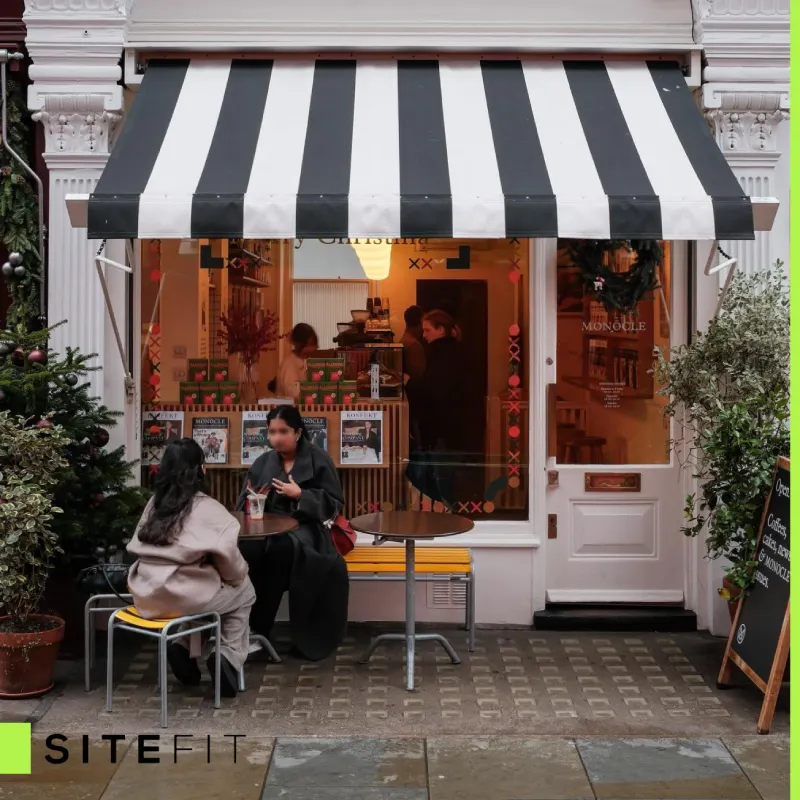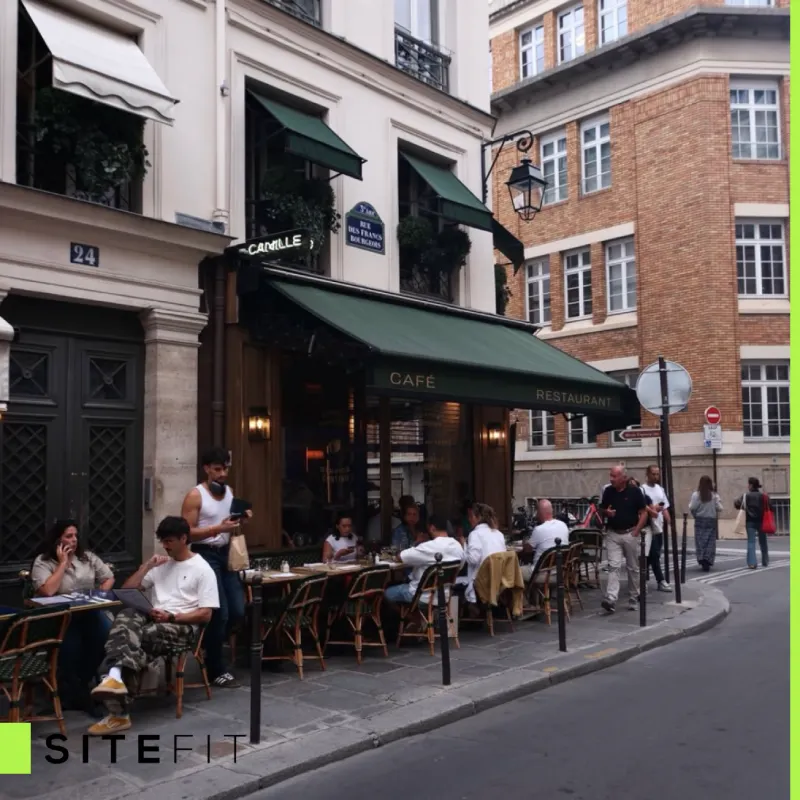
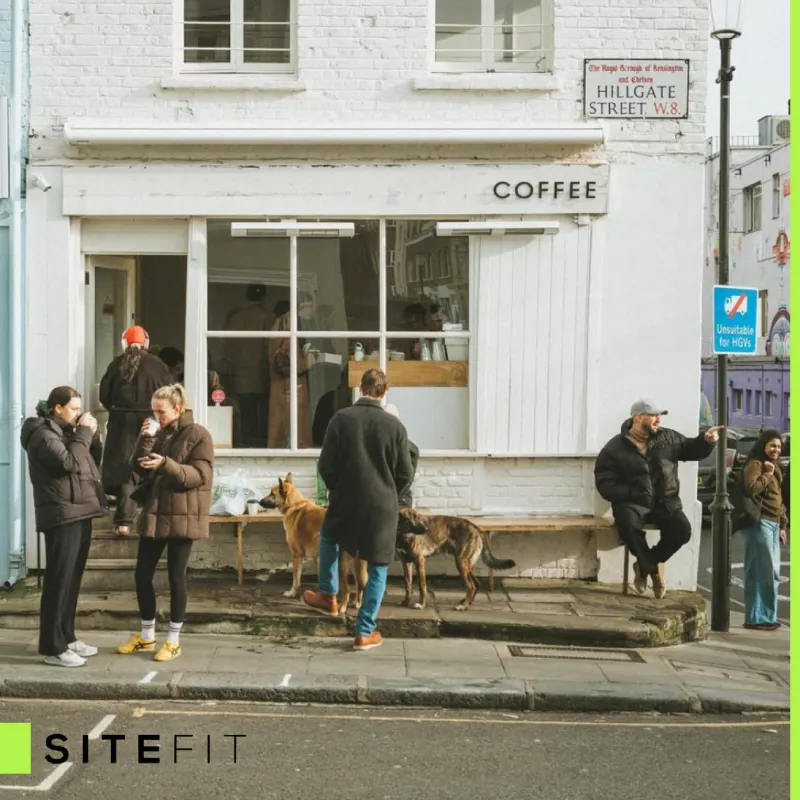
You have spotted a café unit in London and searched the surrounding streets. There are already several coffee shops nearby. Is that a warning sign, or evidence that people come to the area for coffee? The honest answer is: the count alone cannot tell you. Competition research is useful when it helps you understand what customers can already choose, how those businesses differ from your idea and what remains uncertain. It is much less useful when a map full of pins becomes a confident claim that the area is saturated or wide open. This guide shows how to examine nearby cafés in a grounded way before you commit to a property.
Define what you mean by a competitor
Start with the customer and the occasion. A coffee shop serving takeaway espresso to commuters may compete with a station kiosk, a bakery or a convenience shop as well as another café. A place designed for long, relaxed visits may have a different set of alternatives. Write down your intended offer, typical visit, likely price positioning and opening hours. Then ask which nearby businesses could realistically serve the same person for the same reason.
This is a working definition, not a fixed radius on a map. People choose routes, destinations and habits in ways that a simple circle cannot capture. A business two streets away might be highly relevant if it sits on the same route, while a closer one may serve a different use or customer. Begin with a sensible walkable area, then adjust it after visiting the site and understanding how the streets connect. Explain why each place is included. That makes the research easier to review and prevents “nearby” from turning into “direct competitor” without evidence.
Build a current list and verify it
Online maps and directories are useful for finding leads, but they can contain duplicates, old names, closed venues or incomplete categories. Use them to make a first list, then verify the places that could matter. Check the business's own current information, visit where practical and note the date of your check. If a listing says “café” but the current offer is mainly a bakery, pub or restaurant, describe what you observed instead of keeping a broad label that hides the difference.
A register entry is not the same as a confirmed open shop, and an open shop is not automatically a direct rival. Keep the evidence type beside each note: observed in person, stated by the business, listed in a directory or not yet confirmed. Do not treat missing online information as proof that a business has closed. If the status cannot be established, leave it uncertain and decide whether it is important enough to investigate further. The goal is a reliable picture of what you know, not the longest list of pins.
- Name and address checked against a current source.
- Offer, service style and opening times recorded with a date.
- Unconfirmed entries clearly marked for follow-up.
Compare offers, not just business names
Visit relevant cafés as a customer and observe the parts of the offer that distinguish them. What is on the menu? Is the main use takeaway, sitting in, a quick meeting or a longer stay? What can you see about seating, service, accessibility and opening hours? What seems to bring people there at the time of your visit? Keep your notes descriptive. “Several customers sat outside on a Saturday morning” is clearer than “the shop has strong demand” when you have only one observation.
Look for patterns and gaps, but do not decide too quickly what they mean. Several independent cafés might indicate a local coffee culture, a busy destination, a tough field of alternatives, or all three. A chain may have strong visibility and a different offer from a small neighbourhood café. A quiet visit may reflect the day, time, weather or season. Record enough context to interpret what you saw later. If you intend to trade early, lunchtime and weekends, make observations that cover those periods rather than relying on one convenient visit.
Ask whether your idea has a clear reason to be chosen
Competition research becomes useful when it is connected to your own concept. What would a customer get from your café that is meaningfully different for them? It might be a menu focus, a service rhythm, seating arrangement, an accessible stop on a regular route or a neighbourhood role. “Better coffee” is a starting thought, not evidence that the idea fits the area. Be specific about the customer and occasion, and be honest about what you have not tested.
You do not need a completely empty street to have a reason to continue. Nor does a gap on a map prove that customers want the missing offer. Treat each possible opportunity as a question: who might use it, when, and what evidence supports that? Speak with potential customers if appropriate, observe relevant routes and compare credible local information. Keep opinions, estimates and observations separate. This approach helps you avoid two common traps: dismissing a location just because it has competitors, and assuming there is unmet demand simply because you cannot see an obvious rival.
Use local context carefully
The businesses around a property sit within a wider neighbourhood. Homes, workplaces, education, transport and other destinations can help explain who may be in the area and at what times. Use sources that match the question. Resident or workplace statistics describe the wider context; they do not measure café visits or purchases. A transit stop can indicate a connection, not a count of customers walking past your door. A short visual check can tell you what happened during that visit, not what happens every day.
For each source, record its geography, date, definition and limitations. Avoid combining different areas as if they were interchangeable. If a figure applies to a neighbourhood or census zone, say so. Do not turn population into guaranteed customers, transport access into measured footfall, or competitor counts into a sales forecast. An honest research note is more useful than an impressive-sounding number that answers a different question from the one you are trying to solve.
Compare the property and the customer experience
A competitor may have a similar menu but a different customer experience because its frontage, layout, access or operating conditions differ. At your proposed unit, look at visibility from the approaches people actually use. Check where a queue could form, whether customers can enter comfortably, and how deliveries and staff movement would work. Note possible constraints and ask the landlord or agent for documents rather than guessing from a photograph.
Also consider how the premises support the offer you plan to make. Seating, preparation, storage, utilities, ventilation, works and permissions may need specialist checks. Confirm the permitted use and any property-specific restrictions with the local authority or an adviser. In England, planning use classes changed in 2020, and broad class descriptions do not resolve every condition or building issue. A competitor's ability to trade nearby does not prove that your proposed unit has the same permissions or practical setup. Check the unit itself.
Turn the research into a decision and next action
Summarise what you learned in three short lists: what supports your idea, what challenges it, and what you still need to verify. Include the source and date for important observations. Then ask which unknown could change your decision. If the key issue is whether the street has activity at breakfast, return at that time. If the concern is a possible direct competitor, verify its current offer. If the property may not support your operation, ask for documents and qualified advice.
A competitor count is a useful prompt for research, not a verdict on a location. The strongest next step is a focused check that connects your business idea to current, relevant evidence and the actual premises. SiteFit can help put a London commercial address into context for a coffee shop, restaurant or salon. Its Free Snapshot is an initial location assessment, not a forecast of sales or a guarantee that an idea will work. Keep the limits visible, check material unknowns and make the lease decision with the information appropriate to your circumstances.
Keep a dated copy of your notes as the area changes. If you return a few weeks later, do not quietly combine the new visit with the old one as if conditions were identical. Note what changed and whether it affects the question you were investigating. This small habit makes your research easier to explain and helps you revisit the decision without relying on memory alone.